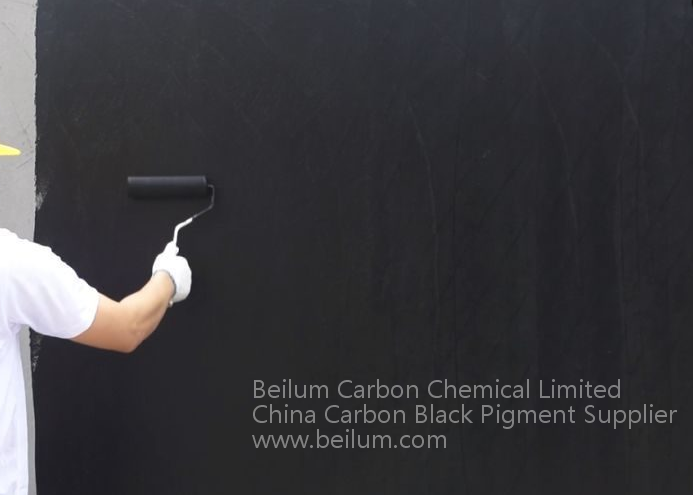
Carbon black N550 is an important industrial raw material and is widely used in various fields. Among them, as an additive, carbon black plays an important role in the rubber industry. In the production process of foam rubber, carbon black is widely used, and its unique physical and chemical properties make it an ideal choice for achieving excellent foaming properties of rubber.
Foam rubber is a widely used material characterized by lightness, softness and certain cushioning properties. In order to meet the needs of different application fields, rubber materials must have appropriate foaming properties.

Carbon black n550, as a filler, can form a three-dimensional network structure in rubber, thereby increasing the strength and wear resistance of rubber. At the same time, It can also improve the electrical conductivity of rubber and give rubber products a conductive function
So, in the production process of foam rubber, what kind of carbon black n550 is more suitable?
- First of all, the type and properties of carbon black have an important influence on the performance of foam rubber. According to the application requirements, carbon black particles with larger structures are usually selected to form a more stable network structure in the rubber. These particles can not only provide better reinforcement effects, but also help to increase the anti-aging properties of rubber. Choosing carbon black that is too fine or has an unstable structure may lead to unstable rubber performance, affecting the quality and service life of the product.
- Secondly, the dispersibility of carbon black also has an important influence on the quality of foamed rubber. High-quality carbon black should have good dispersibility and be evenly dispersed in the rubber. This can avoid carbon black agglomeration and affect the mechanical properties and appearance quality of the rubber. At the same time, good dispersibility also helps to improve the interaction between carbon black and rubber, increase the adhesion between rubber and carbon black, and improve the processing performance and tensile strength of rubber.
In practical applications, there are many common types of carbon black, such as carbon black N330, carbon black N550, carbon black N660, etc. They have different performance characteristics and are widely used in different fields.
- Carbon black N330 is a commonly used carbon black with small particles and large specific surface area, which helps to improve the tear resistance and wear resistance of rubber.
- Carbon black N550 is a carbon black with larger particles. Its structure is relatively stable and can provide good reinforcement effect. It is suitable for rubber products requiring higher strength.
- Carbon black N660 is a carbon black with larger particles and relatively stable structure, which is widely used in industrial rubber products, such as tires, conveyor belts, etc.
However, with the continuous advancement of science and technology, the research and development of carbon black n550 is also advancing. In addition to traditional types of carbon black, there are also some new types of carbon black used in foam rubber. For example, surface-modified carbon black, by modifying the surface of carbon black, can further enhance its interaction with rubber, improve the dispersibility and strengthening effect of carbon black. At the same time, there are some functional carbon blacks, such as conductive carbon black, which can give rubber products conductive properties and are widely used in electronics, automobiles and other fields.
As an additive for foam rubber, carbon black n550 plays an irreplaceable role in the rubber industry. The choice of its type and performance will directly affect the quality and performance of foam rubber. Therefore, in actual production, it is necessary to reasonably select the type of carbon black and control the amount of addition according to the specific application requirements to ensure the excellent performance of foam rubber. At the same time, the continuous advancement of science and technology will also provide more possibilities for the research and development and application of carbon black, and help the sustainable development of the rubber industry.

Beilum Carbon Chemical Limited
T: +86 (0) 632 8992979 | F: +86 (0) 632 8992936
E: bc@beilum.com
W: www.beilum.com