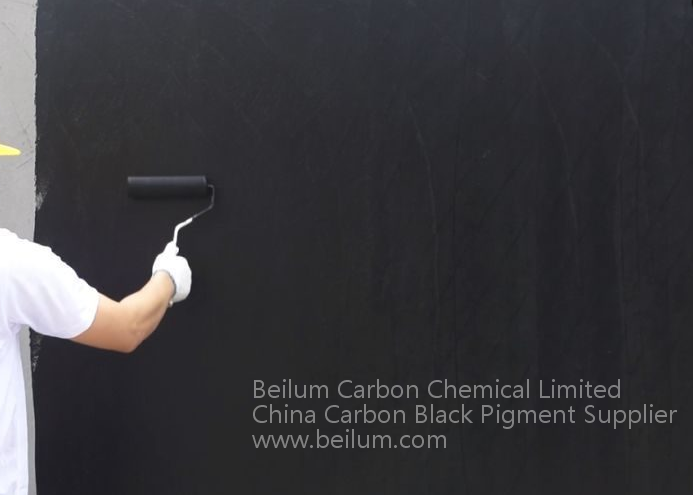
Pigment Carbon black, as a common carbon black pigment, has a wide range of applications, one of which is ink manufacturing. Carbon black, with its unique properties and diverse functions, gives indispensable characteristics to ink, thus playing an important role in the fields of printing and coating.
1. Characteristics of pigment carbon black
Pigment Carbon black is a fine particle formed by carbon element, and its color can range from light gray to dark black. Its special chemical structure makes carbon black have high adsorption capacity and conductivity. The particle size, surface area and structure of carbon black can be controlled by adjusting the preparation process to achieve different types of carbon black, such as hot melt carbon black, gas phase carbon black, etc.
2. The role of pigment carbon black in ink
Enhance chroma and hiding power: Pigment Carbon black can give the ink a dark black tone and improve the chroma and visual effect of the printed product. Its high adsorption capacity and dispersibility enable the carbon black in the ink to be evenly distributed in the medium, thereby enhancing the hiding power of the ink and allowing the printed product to present a full color on various media.
Adjust rheological properties: Rheological properties are the performance of the fluidity and stability of ink during the printing process. The addition of carbon black can adjust the viscosity and fluidity of the ink, so that the ink can flow more smoothly on the printing press and dry quickly after printing, thereby improving production efficiency.
Improve lightfastness and weather resistance: The high adsorption capacity and conductivity of Pigment carbon black enable it to absorb and disperse ultraviolet rays, thereby reducing the degree to which other components in the ink (such as pigments and resins) are exposed to ultraviolet radiation. This feature can effectively improve the lightfastness and weather resistance of printed products, making them less prone to fading and aging during long-term use.
Reduce costs: As a common material, carbon black has a relatively low cost. Adding an appropriate amount of carbon black can reduce the manufacturing cost of ink to a certain extent, thereby bringing economic benefits to the printing industry.
3. Application of pigment carbon black in different types of inks
Offset ink: Carbon black is widely used in offset inks, which can improve the chroma, hiding power and stability of the ink, so that the printed products can maintain good printing quality during high-speed printing.
Gravure ink: Gravure ink usually requires higher chroma and glossiness. The addition of carbon black can enhance the color depth of the ink and improve the gloss of the printed product.
Screen printing ink: Screen printing usually requires that the ink can be evenly distributed on different types of substrates during the printing process. The addition of carbon black can help achieve better ink dispersion and improve the uniformity of printing.
Water-based ink: Carbon black can also be used in water-based inks. Through appropriate treatment and dispersion technology, the stable dispersion of carbon black in the water-based system can be achieved, thus providing the possibility for the manufacture of environmentally friendly inks.
4. Precautions in the use of pigment carbon black
Although carbon black has many advantages in ink, it is also necessary to pay attention to some problems in use. For example, excessive use of carbon black may reduce the fluidity and viscosity of the ink and affect the printing quality. In addition, different types of carbon black have different effects on the performance of inks, so sufficient experiments and tests are required when selecting the type and amount of carbon black.