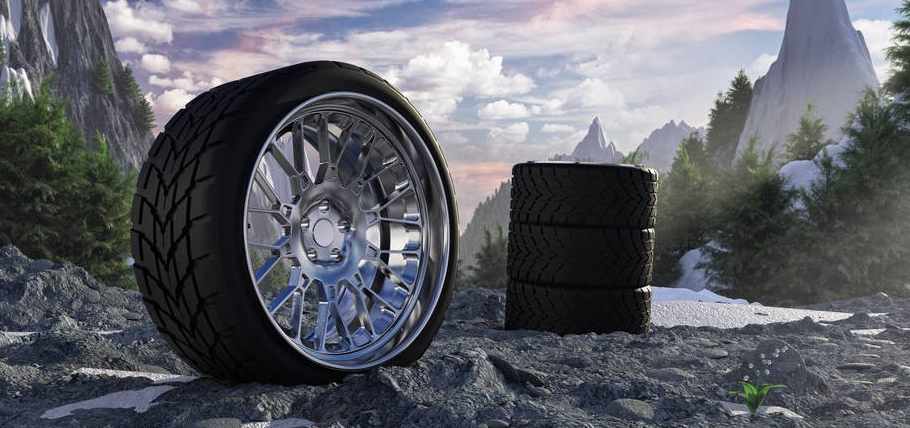
Tires are an important part of automobiles. They carry the weight of the entire vehicle and directly affect the vehicle’s handling stability, braking performance, fuel economy and ride comfort. Tire Carbon black, as a commonly used filler, is widely used in tire manufacturing and can significantly affect tire performance. However, traditional carbon black fillers have some defects, such as easy aggregation and increased rolling resistance. Therefore, through carbon black modification technology, tire performance can be further optimized and the adaptability of tires under different conditions can be improved.
Principle of Tire carbon black modification technology
Tire Carbon black modification technology is to use chemical, physical or other methods to treat the surface of carbon black to change its surface properties and structure in order to achieve the purpose of improving tire performance. Common carbon black modification technologies include silane coupling agent modification, surfactant modification, polymerization modification, etc.
Silane coupling agent modification is to react silane coupling agent with the surface of carbon black to form chemical bonds, enhance the bonding force between carbon black and rubber matrix, and improve the wear resistance and tear resistance of tires. Surfactant modification forms a layer of surfactant molecule film on the surface of Tire carbon black, reduces the aggregation of carbon black, and improves the dispersion and filling performance of carbon black. Polymerization modification is to carry out polymerization reaction on the surface of carbon black to increase the branching and cross-linking structure of carbon black, thereby improving the heat resistance and anti-aging performance of the tire.
The effect of Tire carbon black modification technology on tire performance improvement
Improved wear resistance
Tire Carbon black modification technology can improve the compatibility between carbon black and rubber matrix and enhance the bonding force between the two, thereby significantly improving the wear resistance of tires. The modified tires have less wear under complex road conditions, extend the service life of tires, reduce the frequency of tire replacement, and save resources.
Improved heat resistance
Through carbon black modification technology, the heat resistance of tires is improved. Under high temperature conditions, the modified tires show better stability and anti-aging performance, reducing the possibility of tread cracking and failure caused by high temperature.
Improved wetland performance
Modified Tire carbon black can increase the adhesion between the tire and the wet road surface, improve the grip of the tire when driving in rainy days, reduce the risk of skidding during intense driving, and enhance driving safety.
Enhanced anti-aging performance
The modified carbon black makes the tire more resistant to external environmental factors such as ultraviolet rays and oxygen, slows down the aging of the tire, and extends the service life of the tire.
Reduce rolling resistance
Modified Tire carbon black can reduce the rolling resistance of the tire, reduce the energy consumption of the vehicle during driving, improve fuel economy, reduce the emission of automobile exhaust, and have a positive impact on the environment.