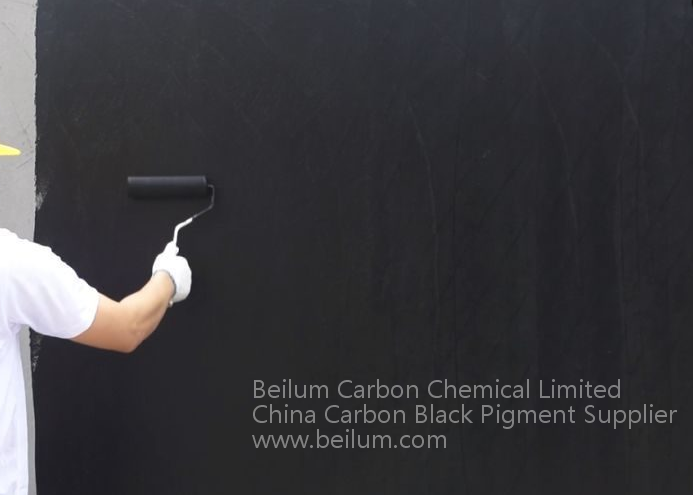
As a common ink filler, Pigment Carbon Black plays an important role in the printing and writing industry. Its unique physical and chemical properties give the ink better performance and plasticity.
Advantages:
Color concentration and depth: Pigment Carbon black has a high degree of black color, making it an ideal choice for making black inks with high depth and concentration. This dark color can provide excellent visual effects, making text and patterns more vivid.
Covering power: Pigment Carbon black particles are small and well dispersed, so they can effectively fill the gaps in the ink and improve the covering power of the ink. This allows the ink to evenly cover the printed substrate during printing, improving the quality of the printed product.
Durability and stability: Pigment Carbon black has good stability under the influence of light and oxygen, and is not prone to color degradation. This allows carbon black ink to maintain its color stability and not fade easily during long-term use.
Conductive properties: Pigment Carbon black has certain conductive properties, which has led to its development in the field of electronics. Carbon black ink is often used to make conductive inks for printing conductive circuits, touch screens and other fields.
Limitations:
Limited rheological properties: Pigment Carbon black itself has poor fluidity, so rheological modifiers may need to be added during the ink production process to improve the fluidity of the ink. This may affect the stability of the ink and processing costs.
Wide particle size distribution: Pigment Carbon black has a wide particle size distribution, which may result in larger particles in the ink, affecting the smoothness of the printed product. Fine process control is required to reduce the impact of particles on the quality of the printed product.
Inadequate UV resistance: Pigment Carbon black ink has relatively poor UV resistance and is prone to color degradation after long-term exposure to UV rays. This may limit the scope of use of carbon black ink in outdoor applications.
Environmental impact and health issues: The production and use of Pigment carbon black may produce pollutants and have an impact on the environment. In addition, carbon black particles may be suspended in the air, posing certain risks to the working environment and workers’ health.