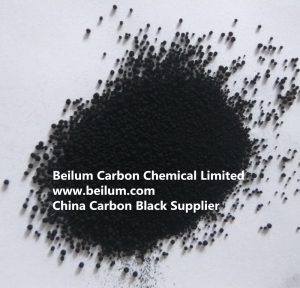
As an important filler, m plays a vital role in the tire industry. However, traditional carbon black has limitations in some aspects, such as poor adhesion to rubber and insufficient conductivity. SO the surface modification technology of Tire carbon black is important to pay attention.
1. The role of Tire carbon black in the tire industry
Tire carbon black is a fine particle composed of carbon elements, which is used as a filler in the tire manufacturing process. The addition of Tire carbon black can significantly improve the mechanical properties of rubber, such as improving the wear resistance, strength and elastic modulus of tires. In addition, carbon black can also increase the thermal conductivity and electrical conductivity of tires, improve the grip of tires on different road surfaces, and enhance driving safety. However, traditional carbon black has problems with compatibility and dispersibility with rubber, which limits the performance of tires.
2. Classification of tire carbon black surface modification technology
In order to overcome the limitations of traditional carbon black, researchers have carried out a variety of surface modification technologies. The main surface modification technologies include:
Chemical modification: By introducing functional groups on the surface of Tire carbon black, the interaction between carbon black and rubber is increased, and the dispersion and compatibility are improved.
Physical modification: By coating a layer of functional substances on the surface of Tire carbon black, the surface properties of carbon black are changed to improve the bonding effect with rubber.
Nano-composite modification: Composite modification of nanomaterials and carbon black to improve the performance and conductivity of tires.
Heat treatment modification: Change the crystal structure and surface morphology of carbon black through heat treatment to improve its compatibility and adhesion with rubber.
3. Impact of tire carbon black surface modification technology
Improve tire performance: Through surface modification technology, the bonding effect of Tire carbon black and rubber is enhanced, and the mechanical properties and conductivity of rubber are improved, so that the wear resistance, aging resistance, grip and other properties of the tire are significantly improved, and the service life of the tire is extended.
Reducing energy consumption and environmental impact: The modified carbon black is filled in the tire, which can reduce the rolling resistance of the vehicle during driving, thereby reducing fuel consumption, reducing carbon dioxide emissions, and helping to save energy and reduce emissions, and mitigate climate change.
Promoting the development of green tires: Tire Carbon black surface modification technology makes the bond between carbon black and rubber stronger, reduces the volatilization of carbon black during use, reduces environmental pollution, and helps promote the research and development and application of green tires.
4. Outlook
With the continuous development of the tire industry and the continuous improvement of performance requirements, Tire carbon black surface modification technology will continue to be deeply studied and applied.
In the future, we can foresee that surface modification technology will be more diversified and may combine multiple modification methods to achieve better results. At the same time, researchers also need to focus on the impact of modification technology on tire durability and sustainability to better meet social and environmental needs.