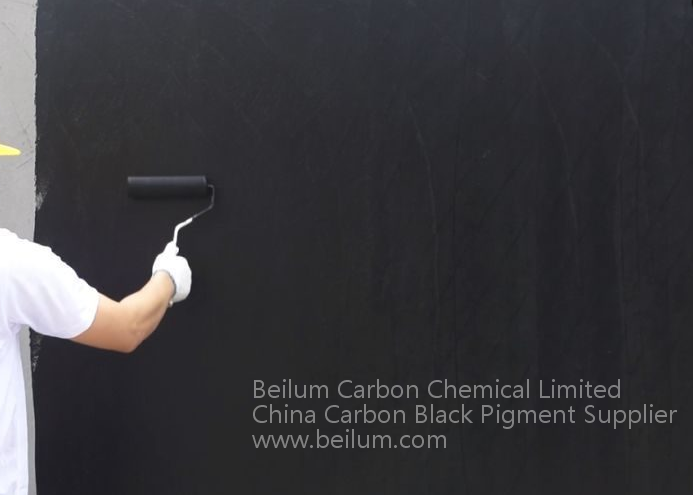
Coating Carbon Black Pigment is an important filler and additive with wide application in anticorrosion coating.
Anticorrosion coating is an important type of coating, which is widely used on various metal and concrete surfaces to improve the corrosion resistance and service life of the materials. As a filler and additive in anticorrosion coating, coating carbon black pigment plays a key role in the performance of coating.
Basic characteristics and types of coating carbon black pigment
Coating carbon black pigment is a black particle composed of carbon element, which has a large surface area, many pores, good adsorption capacity and black pigment characteristics. According to its preparation process and characteristics, coating carbon black can be divided into granular carbon black and powdered carbon black pigment. Granular carbon black has a high specific surface area, which can increase the adhesion and strength of the coating; while hydrophobic carbon black exhibits excellent water resistance and corrosion resistance in humid environments.
Mechanism of action of coating carbon black pigment in anticorrosion coating
Coating carbon black plays a variety of roles in anticorrosion coating. First, due to its granular characteristics, carbon black can fill the voids in the coating and increase the density and durability of the coating. Secondly, carbon black forms a hydrophobic layer on the surface of the paint to prevent moisture from penetrating into the paint, thereby slowing down the corrosion rate of the metal surface. In addition, carbon black also has a certain light stability, can absorb ultraviolet rays, and reduce the damage of ultraviolet rays to the paint film.
Optimizing the use and precautions of carbon black in paint formulas
In order to give full play to the role of paint carbon black pigments, it is necessary to reasonably optimize the use of carbon black in paint formulas. First, according to the type of paint and the use environment, select the appropriate type and particle size of carbon black. Secondly, control the amount of pigment carbon black added. Too much carbon black may cause problems such as high viscosity and poor leveling of the paint.
In addition, attention should be paid to the dispersibility of carbon black, optimize the selection of dispersants, and ensure that the pigment carbon black is evenly dispersed in the paint. Finally, consider the compatibility of paint carbon black with other additives to avoid the impact of adverse reactions on the performance of the paint.
With the continuous advancement of science and technology, the application of paint carbon black in anti-corrosion coatings will be further expanded and optimized. In the future, we can improve the performance of carbon black through nanotechnology, increase its specific surface area and dispersibility, and thus improve the corrosion resistance of the paint. In addition, the use of smart coating technology to achieve the self-healing function of carbon black pigment in the coating will further extend the service life of the coating.