Concrete has been used as a building material for thousands of years. The ingredients in concrete have changed little over this time. The traditional recipe is a mixture of Portland cement (calcium silicate), water and aggregate with small amounts of admixtures added to enhance certain performance characteristics.
This basic recipe has been adapted for use in many applications ranging from sidewalks to highrise buildings and bridges. For example, the addition of water reduces early-stage strength but increases workability and flow properties. Admixtures are used to modify other properties including setting time, shrinkage, shrinkage cracking, abrasion resistance, etc. One such admixture is a material called concrete carbon black. Concrete Carbon black has been used in concrete since the mid-1980s as a pigment and to increase abrasion resistance (a property called surface hardness).
The use of carbon black as an admixture in concrete was expanded about 10 years ago when scientists at Delft University of Technology in the Netherlands discovered that microscopic carbon black particles could be added to concrete at levels as high as 20% by weight
Carbon black is an amazing material. It is made from incompletely combusted organic matter, such as oil, coal or natural gas. Carbon black is used in a wide range of products including paint, rubber, plastics and ink to improve their properties. One important use for carbon black is the reinforcing agent in high performance concrete.
As a reinforcing agent in concrete, concrete carbon black helps to improve the overall strength of the concrete. Concrete reinforced with carbon black exhibits improved toughness and fatigue resistance compared to non-reinforced concrete. This means that it takes more energy to break apart carbon reinforced concrete than non-reinforced concrete. The addition of concrete carbon black also helps protect against corrosion caused by chemicals or exposure to salt water by providing a protective seal around metal rebar.
These properties make carbon reinforced concrete ideal for pipelines, bridges and other structures that need to withstand harsh environments or extreme weather conditions.
So how does this magical material work? When added to concrete, the nanoparticles of carbon black align themselves into tiny columns within the cement paste matrix that surrounds aggregate particles such as sand and gravel.
High performance concrete is a term used to describe any type of concrete that outperforms standard concrete. Also known as advanced, high strength, engineered or ultra-high performance concrete, this material is usually comprised of the same basic ingredients as regular concrete: cement, water and aggregates. What makes it “high performance” is the quality and quantity of these ingredients, along with the way they’re processed and combined. The discovery of new materials and additives has allowed engineers to create powerful concretes that are fire resistant, durable and long-lasting.
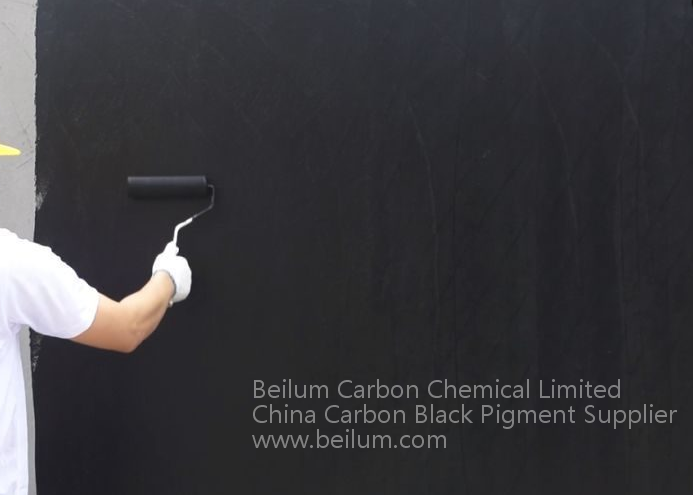
Concrete Carbon black is one of the latest innovations to hit the construction industry. It’s a fine powder that’s added to concrete to make it stronger and more versatile. It can be used for almost any type of project, from projects in extreme weather conditions to structures that need to support heavy loads.
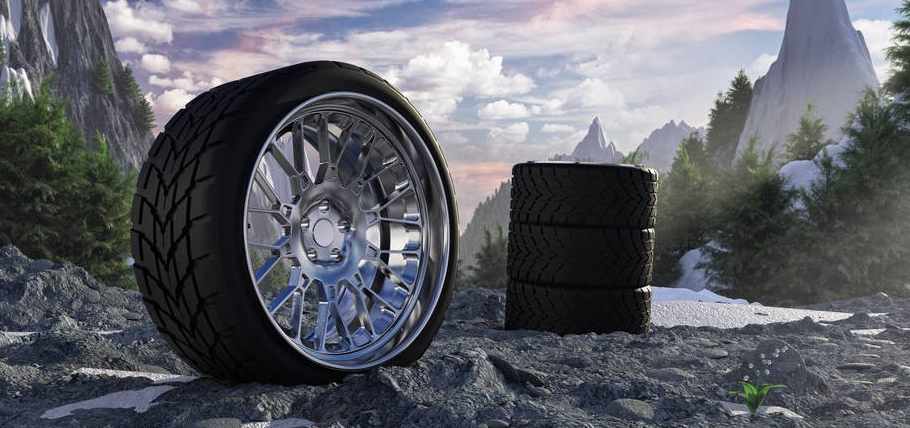
Many people have heard about carbon black because it’s used in tires, but few are aware of its other uses. In fact, there are many different types of carbon black, which are manufactured for different purposes. One type is specifically designed for use in high-performance concrete.
This post describes concrete carbon black and explains how it works in high-performance concrete.
Carbon black is a filler material used in various applications such as tires, plastics, pigments and inks. It’s a by-product of the incomplete combustion of hydrocarbons – produced when oil or gas is burned with insufficient air to produce soot. This soot is then collected and processed into carbon black.
There are different grades and types of carbon black available for various end-user applications however, one common feature remains true across all types: The surface area of carbon black is extremely large. In fact, the surface area can be higher than 100 m2/g – that’s approximately equal to the size of a football field! You can imagine how this translates into the performance of concrete when concrete carbon black is added.
Concrete is a composite material made up of four main ingredients: aggregates, cement paste, water and admixtures. Each ingredient plays an important role on the final performance of concrete. Some ingredients are more expensive than others (e.g. cement paste) while some others play a key role in enhancing properties such as durability (e.g. admixtures). All ingredients need to be considered and included in concrete design specifications in order to ensure high performance concrete for the specific end user application.

While cement
High performance concrete (HPC) is the name given to concrete that has been engineered with high strength and durability in mind. Concrete has many characteristics that make it a popular construction material, but when it comes to high stress situations like bridges and large infrastructure projects, it can be prone to failure.
This is where high performance concrete comes in. HPC is designed to withstand large loads, severe weather conditions and other stresses. It’s one of the most reliable materials for bridges and buildings, especially when concrete failure would have disastrous consequences.
What Makes Concrete High Performance?
High performance concrete uses special ingredients to boost its strength and durability. The key ingredient that makes this possible is carbon black. Concrete Carbon black is an extremely fine powder that can be mixed with other components to create a stronger, more resilient product than regular concrete provides on its own.
It’s made by burning natural gas or fuel oil under controlled conditions, creating carbon particles that are then ground into very fine powder form. Carbon black was originally used in rubber manufacturing to make tires stronger, but the same principles can be applied to concrete manufacturing as well.
Carbon black is a reinforcing filler that is used to improve performance, mechanical properties and visual appearance of concrete. It is also used as a pigment for coloring concrete. Concrete Carbon black is produced by burning natural gas in the presence of limited amount of oxygen at high temperature (1,500 degrees Celsius).
The basic chemical structure of concrete carbon black consists of large number of molecules packed together with weak physical bonding. Concrete Carbon black particles are generally small and agglomerates are formed when they are exposed to air due to van der Waals forces. When these agglomerates are added to cement paste, they break apart due to shear forces caused by mixing.
Van der Waals forces between concrete carbon black particles and water molecules help disperse them in the water. This dispersion increases the surface area of concrete carbon black and affects its hydrophilicity. As a result, it enhances the dispersion of cement particles and reduces the rate of sedimentation (in case if cement slurry or mortar is prepared earlier) during production process.
Concrete Carbon black also improves the mechanical properties, such as compressive strength, tensile strength and modulus of elasticity of cementitious composites, by forming strong interfacial bonding between cement particles and aggregate.