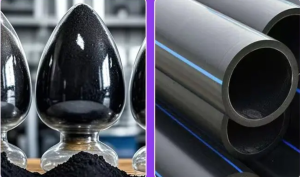
Conductive Carbon Black, as a special carbon black material, has attracted much attention for its magical conductive properties. It plays an important role in electronics, energy, materials science and other fields, and has brought us many unprecedented technological breakthroughs.
1. Preparation method of Conductive Carbon Black
Conductive Carbon Black is a highly pure carbon black material, and its preparation methods usually include physical method and chemical method.
- Physical method: The physical method mainly improves the conductivity through the dispersion and surface modification of carbon black. Among them, mechanical ball milling, ultrasonic treatment and high temperature heat treatment are common physical methods.
- Chemical method: The chemical method mainly introduces functional groups on the surface of carbon black to increase its hydrophilicity and conductivity. Among them, oxidation, nitration and reduction are commonly used chemical methods.
- Regardless of the method used, the preparation process of conductive black needs to be strictly controlled to ensure its purity and the stability of its conductive properties.
2. Conductive mechanism of Conductive Carbon Black
The conductive mechanism of conductive carbon black is determined by its special microstructure and electronic state density.
- First of all, the microstructure of conductive carbon black is very complex. It is composed of many fine particles aggregated to form a porous network structure. This porous structure facilitates the transmission and diffusion of electrons, making carbon black an excellent conductive material.
- Secondly, the surface of conductive carbon black has a large number of active sites, which can adsorb gas and water molecules in the surrounding environment to form a conductive channel. In addition, there are abundant impurities and defects in carbon black, which also help to improve its conductivity.
- In general, the conductive mechanism of conductive black is a complex multi-factor comprehensive process, and its conductive properties are affected by factors such as structure, surface properties and impurities.
3. Broad application prospects of conductive carbon black
The magical conductive properties of conductive carbon black make it have broad application prospects in various fields.
- Electronic field: Conductive carbon can be used to prepare high-performance conductive inks, conductive adhesives and conductive polymer materials, and is widely used in electronic products such as printed circuit boards, flexible displays and smart phones.
- Energy field: Conductive carbon black can be used as an additive for lithium-ion batteries and supercapacitors to improve the conductivity and energy storage performance of their electrodes, thereby enhancing the cycle life and energy density of batteries and supercapacitors.
- Materials Science: Conductive black can be used to prepare conductive composite materials, such as conductive polymer composites and conductive ceramic composites, which are widely used in electromagnetic shielding, sensors and photovoltaic devices.
- Biomedicine: carbon black also has potential application prospects in the biomedical field. It can be used as a biosensor and medical electrode material to detect electrophysiological signals and the concentration of biomolecules in vivo.