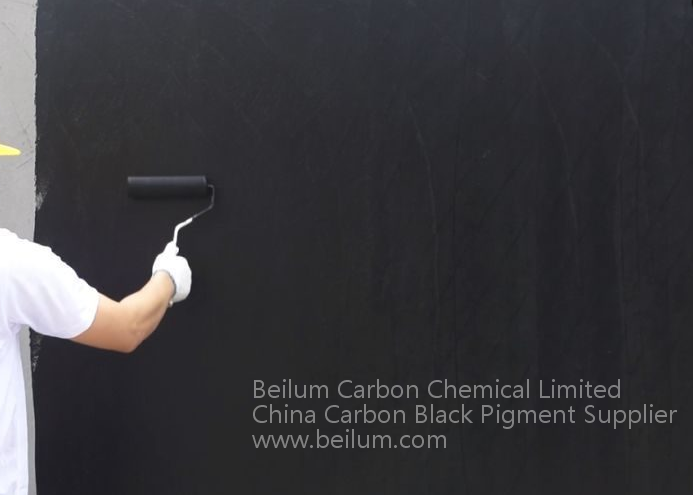
As a common coating material, coatings play an important role in decoration, protection and function. The blackness of the coating, as an important performance indicator of the coating surface, directly affects the appearance and market competitiveness of the coating. Pigment Carbon Black, as a commonly used filler material, has high blackness and hiding power and is widely used in the coating industry.

The properties and types of carbon black
Pigment Carbon black is a granular solid material composed of carbon elements with good blackness and UV resistance. According to its production process and application characteristics, carbon black can be divided into different types such as oil-based carbon black, gas-based carbon black, and water-based carbon black. Different types of carbon black differ in particle size, specific surface area, and dispersibility, so the application effect in coatings will also be different.
The selection of Pigment carbon black in coatings
The selection of pigment carbon black in coatings should take into account factors such as the performance requirements of the coating, the use environment, and market demand. For coatings that require higher blackness, carbon black with fine particles and larger specific surface area should be selected to increase its hiding power and blackness. In some special environments, such as areas with severe outdoor sunlight exposure, carbon black with good UV resistance should be selected to extend the service life of the coating.
Preparation of coating carbon black
The preparation of coating carbon black refers to the process of evenly dispersing carbon black in the coating system. Reasonable pigment carbon black preparation can effectively improve the blackness and hiding power of the coating, while avoiding the degradation of coating performance caused by carbon black agglomeration. Preparation methods include mechanical stirring, dispersant-assisted dispersion, etc., which should be selected according to the type of carbon black and the formulation of the coating.
The mechanism of the influence of pigment carbon black on the blackness of the coating
As a filler material, carbon black particles can absorb and scatter light, making the surface of the coating appear black. Carbon black with fine particles has a higher specific surface area and can absorb scattered light more effectively, thereby improving the blackness of the coating. At the same time, the dispersibility of carbon black also affects the uniformity and blackness of the coating. Good dispersibility helps to evenly distribute carbon black particles and increase the hiding power and blackness of the coating.
Experiments and application cases
Through the study of experiments and application cases, we can more intuitively understand the influence of carbon black selection and blending on the blackness of coatings. In the coating production process, by controlling the amount of pigment carbon black added and the blending method, coating products with different blackness requirements can be obtained. The experimental results show that appropriate carbon black selection and blending can significantly improve the blackness of the coating and achieve the expected technical performance.

Beilum Carbon Chemical Limited
T: +86 (0) 632 8992979 | F: +86 (0) 632 8992936
E: bc@beilum.com
W: www.beilum.com