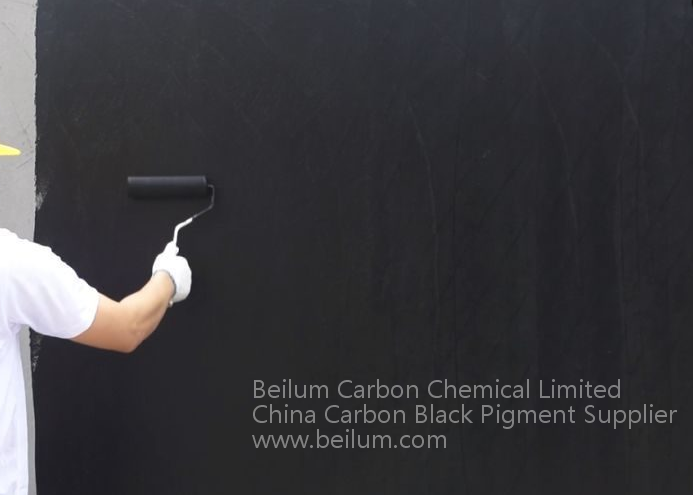
Carbon black, as a common filler material, is widely used in coatings and inks. Carbon Black Pigment enable coatings and inks to meet the needs of different fields due to their excellent performance in color, strength and weather resistance.
However, the dispersion and stability of carbon black pigments directly affect the quality and performance of coatings and inks, so it is of great significance to comprehensively evaluate them.
The dispersion of carbon black pigment in coatings and inks refers to the degree to which carbon black is evenly distributed in the medium. Good dispersion can ensure that the carbon black pigment in the coating and ink is fully dispersed, thereby improving the uniformity and color stability of the product. China Carbon Black Pigment Factory – Beilum Carbon
In order to evaluate the dispersion of carbon black, common methods include:
- Observation method: Observe the dispersion of carbon black in coatings or inks through a microscope. If the aggregation of carbon black particles is more obvious, it means that the dispersion is poor.
- Particle size analysis method: Use a particle size analyzer to measure the size distribution of carbon black particles. Uniform size distribution usually means better dispersion.
- Chroma test method: Evaluate the dispersion performance of carbon black by measuring the chromaticity change of coatings or inks. Uniformly dispersed carbon black particles will show more stable chromaticity values.
Carbon Black Pigment stability assessment
In addition to dispersibility, the stability of carbon black is also an important indicator for evaluating the quality of coatings and inks. Pigment Carbon black stability refers to the ability of carbon black pigments to not precipitate or agglomerate during long-term storage or use. Carbon black with poor stability can cause uneven colors in coatings and inks, reduce product quality, and even affect their service life. Stability assessment methods include:
- Precipitation test: Observe whether carbon black precipitates after the coating or ink sample is left to stand for a period of time. The more obvious the precipitation phenomenon, the worse the stability.
- Centrifugal analysis: Centrifuge the coating or ink sample through a centrifuge to observe whether carbon black particles are deposited at the bottom. Centrifugal analysis is also an effective means to evaluate stability.
Factors affecting Carbon Black Pigment dispersibility and stability
The dispersibility and stability of carbon black in coatings and inks are affected by many factors, mainly including:
- Dispersant selection: Suitable dispersants can effectively reduce the mutual attraction between carbon black particles, which is conducive to improving the dispersibility and stability of carbon black.
- High shear force: In the production process of coatings and inks, higher shear force will cause carbon black particles to disperse more evenly, but excessive shear force may also cause carbon black to be destroyed.
- pH value and solvent selection: The pH value and solvent type of the coating and ink system will also affect the dispersibility and stability of carbon black, which needs to be reasonably selected and controlled.
- Storage conditions: Improper storage conditions may cause carbon black to agglomerate or precipitate, affecting its stability.
Improvement measures to improve the dispersibility and stability of carbon black pigment Powder
In order to improve the dispersibility and stability of carbon black in coatings and inks, the following improvement measures can be taken:
- Optimize the formula: Rationally design the formula of coatings and inks, select suitable dispersants and stabilizers, and ensure the uniform dispersion of carbon black particles.
- Control the production process: Control the size and time of shear force during the production process to avoid excessive shearing and ensure the integrity of carbon black particles.
- Strict storage management: Ensure that carbon black products are stored in a dry, dark and suitable temperature to prevent them from being affected by moisture or exposure to extreme environments that affect their stability.